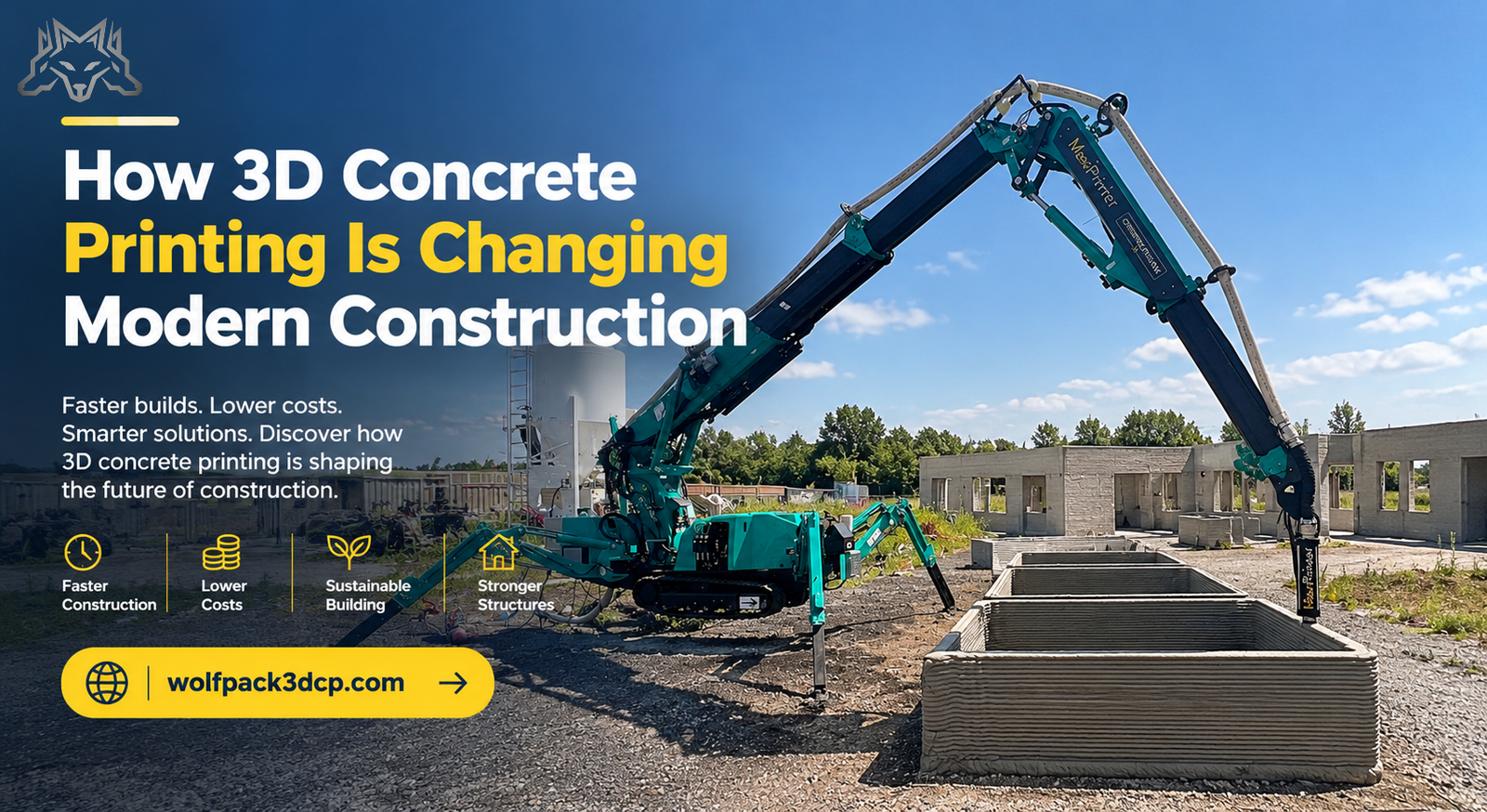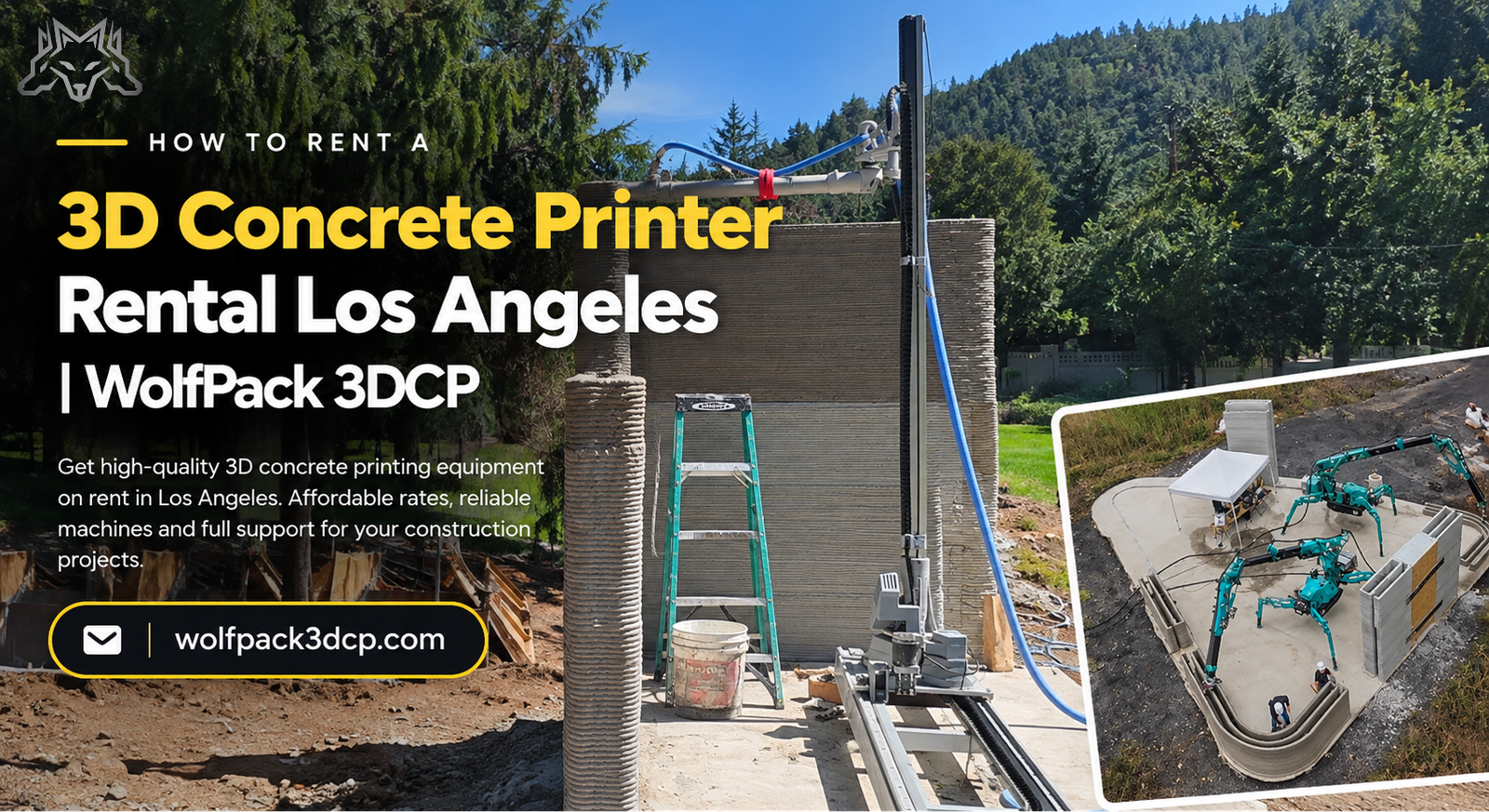


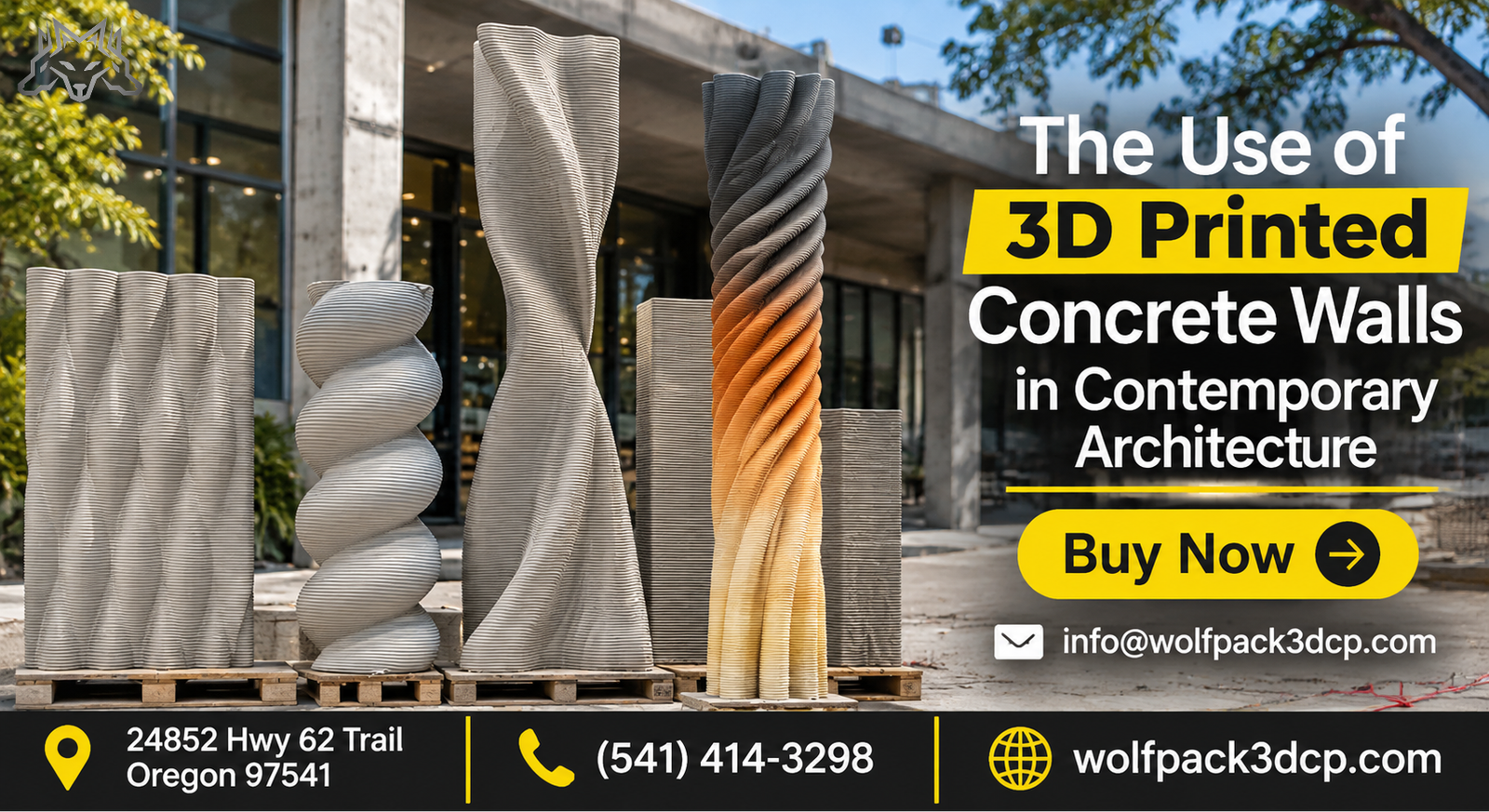
Contemporary architecture is being revolutionized as the construction sector is constantly searching for innovative ways to become more efficient and less repetitive in the building process and design the buildings in a different way. The use of 3D Printed Concrete Walls has started becoming popular since it brings automation of concrete placement and new ways to plan architecturally. The process of building wall structures with the use of 3D printed concrete consists in building structures step-by-step according to the digital design with the help of specialized printing machines.
For contractors, architects, developers and construction specialists, the process of concrete 3D printing can be considered an innovative method for constructing walls. It uses digital design, automated technologies and specially chosen cementitious materials.
What are 3D Printed Concrete Walls?
3D printed concrete walls are walls that are constructed using an automated building process where the printer lays down concrete or any other cementitious mixture in layers. While the walls do not depend solely on the conventional techniques like the use of formwork and the deposition of materials manually, the printer builds the wall through its digital design, as per the designed size and shapes of the wall.
To start off, there needs to be a digital design that gives all the data needed in order for the printing process to take place. This includes wall sizes, wall shapes, curvatures, openings, and so forth. Once this is done, the printer prints out the wall layer by layer until the required wall structure is formed.
This technique is one among those used in 3D Construction Printing.
How Does Concrete 3D Printing Work?
Concrete 3D printing consists of several stages which need to be interlinked. Every stage has its significance in producing the final result of high quality and accuracy.
Digital Design and Project Planning
This first stage includes designing of the wall or the building part with the help of architectural or engineering design software. This way, it is possible to produce all the necessary shapes, sizes, and other details.
Digital design needs to consider the printer, properties of materials used, geometrical characteristics of walls, and requirements of the whole project. Proper planning may help to foresee possible problems that may arise in the process of printing.
Material Preparation
The mixture of the concrete needed for printing should satisfy certain requirements. Namely, it should be easy to pass through the printer while keeping proper consistency to keep layers above.
Selection of materials depends on such aspects as type of printer used, environmental conditions, design of the wall, and other characteristics of the project.
Automatic Placement of Material
With the preparation of the design and materials, the printer starts executing the programmed commands. It lays down the concrete material in layers to create the desired shape of the wall.
Such an automatic operation will save time by automating some manual operations and providing uniform placement of materials if the machinery is used correctly.
Inspection and Finishing
Following the completion of the printing of the wall, it will be subjected to inspection as per the requirements of the project. Architects or other construction experts might have to look into measurements, finishing of surfaces, and connections with other elements of the building.
Other activities might involve the finishing of the construction process as per the design approved.
How 3D Printed Concrete Walls Help in Current Architectural Design
There are many benefits, one of which is that it can allow architects to experiment with new designs. With traditional building processes, constructing complicated shapes may involve using complex formworks. However, concrete printing provides an alternative to producing certain geometrical designs based on digital designs.
Additional Design Freedom
Architects may think about designing curved walls, custom shapes, textured walls, and others. These elements may be hard to achieve using traditional formworks. The printer will follow the digital design and will create selected designs by programming material deposition.
Nevertheless, every design will have to go through an engineering evaluation to ensure that it is structurally sound.
Better Control Over the Building Process
Since automated printing follows specific programmed paths and material deposition, this can result in consistency in terms of building similar walls.
Real-life performance of the process depends on such factors as machine calibration, quality of materials, experience of the worker, and conditions at the building site.
Less Dependency on Some Formwork Operations
Concrete walls made through the traditional method require a temporary mold to ensure that wet concrete takes the desired shape. In 3D printing, the printer prints the wall structure layer by layer. The level of reduction in the process depends on the design of the wall and the construction system.
Potential for Customization
Each construction site requires something unique. Using concrete 3D printing, the designers will be able to make customized designs without depending entirely on the standard rectangular forms.
It may be useful in some selected construction projects.
Advantages of Concrete 3D Printing for Construction Specialists
The increasing popularity of the 3D printing technique stems from its ability to increase effectiveness in particular stages of construction. It does not fit all cases but has several advantages that need to be discussed.
Increased planning of the workflow
With digital models and machinery in place, the construction team can plan the process of printing better. The demands of the project will be analyzed in advance, which allows preparing materials, machinery, and site work in general.
Possibility of increased efficiency of labor
Automated placing of the materials can decrease some of the routine actions. Nevertheless, construction specialists and skilled operators will be required to operate the machinery, handle materials, control, inspect, and finish the work.
Accuracy of design
With proper calibration of the printer and preparation of the digital model, automated placing of materials helps replicate designed dimensions and shapes of the walls.
Material Management Advantages
Controlling material delivery allows the team to estimate the amount of printing material needed. The degree of material savings will depend on wall design, printing settings, waste management, and construction procedure.
New Opportunities for Construction
This technology gives an additional tool for architects and constructors to work with certain building designs. It can help experiment with wall designs and construction procedures, which are difficult to apply using conventional technologies.
The Role of 3D Concrete Printers in Contemporary Projects
3D Concrete Printers are the main pieces of equipment for automating the wall-construction process. They are developed to move according to certain programs and print the special concrete mixture using the printing nozzle.
Systems differ in their abilities. Their working zone, printing speed, motion system, material compatibility, and other operational characteristics can affect the choice of the machine for the specific project.
Before selecting equipment, contractors should consider:
- Printing capacity: Confirm that the machine can handle the planned wall dimensions and project scale.
- Material compatibility: Check whether the concrete mixture meets the printer’s operating requirements.
- Site preparation: Ensure that the construction area can accommodate the equipment and required operations.
- Operator support: Determine whether trained personnel are available to operate and monitor the system.
- Design requirements: Also Confirm that the planned wall geometry can be produced by the selected printers.
- Project schedule: Include setup, printing, inspection, and finishing in the overall timeline.
Selection of the right Concrete Printing Technology is not just based on machine comparison. One needs to consider the whole construction process, from designing to inspecting.
Challenges and Issues That Should Be Taken into Account before Initiating Construction Project
Despite the many new possibilities that have been provided by the 3D construction printing, there is a number of challenges that should be taken into account.
Material Properties
The concrete mix needs to have appropriate consistency and stability of layers.
Structural Requirements
Printed walls need to comply with all relevant engineering and building codes. Reinforcement, connections, openings, load-bearing capacity, and other structural considerations need to be checked by professional engineers.
Equipment and User Qualifications
The printer needs to be appropriate for the particular project, installed correctly, and used by people with appropriate training. Limitations or errors on the part of equipment or users will influence the printed construction.
Building Regulations and Approvals
Construction regulations differ depending on the region and type of project. Before commencing work, the team needs to become familiar with relevant regulations, permits, inspection procedures, and approvals.
Project Costs and Timelines
Total cost of the project is not limited to the printer alone. Also The costs of material preparation, transport, equipment installation, operators. preparation of the construction site, inspections, and finishing works need to be included.
Are 3D Printed Concrete Walls Good for All Projects?
Maybe not. The feasibility of 3D printing of concrete walls would depend on the architectural considerations, structural needs, financial limitations, site situation, the availability of construction equipment, and regulatory guidelines.
This method could prove to be a useful tool for projects where the automation of wall building and design flexibility would bring a real benefit. For other projects, the conventional way of building may continue to be a better choice due to some special structural needs or incompatibility with certain printing machines.
It is necessary to conduct a careful analysis to make sure that concrete printing is feasible in each particular case. Constructors should collaborate with professional architects, engineers, and operators.
Future of 3D Construction Printing
The construction sector is constantly exploring means of integrating digitized design techniques with construction operations. One of these is the 3D construction printing technique because it brings a new way of creating some building elements.
With the evolution of equipment, materials, and design software, this technology may find its application in even more areas in the future. The improved quality of the systems and materials may also enable construction teams to deal with more complicated tasks.
For builders and developers, being aware of such innovations will help to understand and assess construction techniques.
Explore 3D Printing Solutions with WolfPack 3DCP
Construction projects require good planning, proper equipment, and a construction technique appropriate for the project. 3D printed concrete walls represent an option for constructing selected walls using digital models and placing the materials automatically.
Those who want to use this kind of technology in construction should examine their needs first. Also Proper preparation will give you the chance to understand whether this method is appropriate for your construction project.
Interested in 3D printing construction in Southern California? Explore the 3D concrete printers available for sale and rent at WolfPack 3DCP. Contact the experts and find out more about your future construction project!
FAQs:
What are 3D printed concrete walls?
Additionally, these printers create wall structures by depositing concrete suited to the project’s requirements. In consecutive layers via a special printer directed by digital designs.
How do 3D printed concrete walls differ from regular concrete walls?
Regular concrete walls have formworks to hold the concrete in position. 3D printed walls do not require the process of formworks in their formation process.
Is 3D printed concrete wall durable?
The durability of 3D printed concrete wall is dependent on the quality of the concrete mix, the printing process, the structure design, curing, reinforcements, and construction processes. Every project must adhere to all necessary building regulations and engineering specifications.
Is it possible for 3D concrete printers to produce a custom design of wall?
Yes. Different types of 3D concrete printers can produce curved shapes and customized wall designs.
Is it possible to hire a 3D concrete printer?
Yes. It is possible to hire a 3D concrete printer depending on the needs of the contractor.
Concluding thoughts:
The advent of 3D-printed concrete walls has brought about new possibilities in contemporary construction using digital design, automation in the placing of material, and more architectural freedom. Also Even though there are many advantages in utilizing 3D concrete printers. it is necessary to plan appropriately and use appropriate materials, equipment, and operators. The advancement in construction techniques has seen contractors and developers adopt concrete 3D printing as an alternative for future projects. For further information on 3D concrete printers and services, contact WolfPack 3DCP.